

The moobs report 2026: Two in three men do not know they can get breast cancer
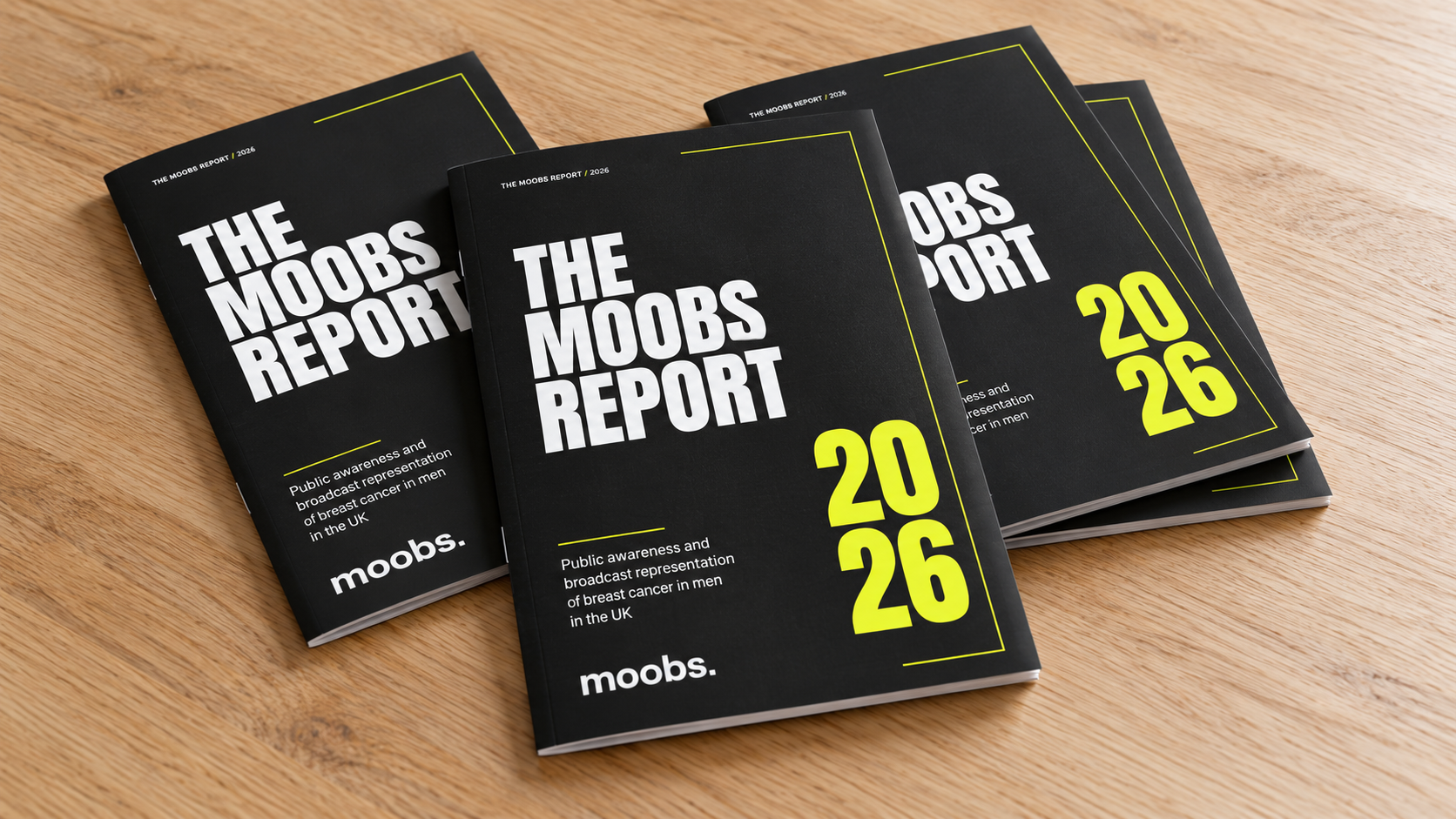
Today, 1st October, we publish The Moobs Report 2026, establishing an annual UK benchmark for public awareness of breast cancer in men.
Our research, commissioned through Censuswide, found that two in three men (67%) did not identify breast cancer as a cancer that can affect them.
Only 42% of UK adults identified breast cancer as a cancer men can get. Recognition was lower among men themselves: 33% compared with 51% of women.
These findings put a number on something many men affected by breast cancer have been saying for years: too many people still do not realise this disease can affect us.
The awareness gap
Among male respondents, breast cancer recorded roughly half the recognition of every other cancer included in the research:
Prostate cancer: 71%
Testicular cancer: 69%
Lung cancer: 65%
Skin cancer: 63%
Bowel cancer: 63%
Breast cancer: 33%
Recognition also varied by age. Just 21% of adults aged 18–24 identified breast cancer as a cancer that can affect men, rising to 59% among those aged 55 and over.
How men feature in broadcast coverage
The report also examines how men feature in broadcast discussion of breast cancer, using analysis from Be Broadcast’s Mission Control.
Of 46,159 monitored breast cancer broadcast records between 1st January and 9th September 2026, just 3% referenced men.
A separate count found that 15% of records referencing men were linked to Coronation Street. Television storylines were also the largest category in a detailed review of 965 records, accounting for 22%.
What needs to change
In response to the findings, we are calling for three practical changes:
1. Make it explicit that men can get breast cancer.
Health organisations and awareness campaigns should state plainly that breast cancer can affect men, and include men in their wording and imagery. This should be routine in public information, rather than confined to content aimed only at men.
2. Make inclusion someone’s responsibility.
Breast cancer organisations should assign responsibility for including men across communications and services, with clear actions and regular review. Men with lived experience should help assess whether those changes are visible and relevant.
3. Provide information and support that are relevant to men.
Health services and support organisations should review forms, leaflets, websites and support information with men who have experienced breast cancer. They should also ensure men can find and access relevant research studies and clinical trials.
“I know because I was one of them”
Our founder, James Richards, was diagnosed with stage-three breast cancer at 36. He said:
“These findings confirm what many men affected by breast cancer have been saying for years. Too many do not realise breast cancer can affect them, while those who are diagnosed still encounter information and support that fail to reflect their experiences.
“I know because I was one of them - when I was diagnosed at 36, I had no idea men could get breast cancer.
“This report shows how widespread the awareness gap remains and sets out practical steps to address it. There is no silver bullet, so I am calling on breast cancer organisations, health professionals and support providers to work with moobs and men with lived experience to turn these recommendations into real change.”
A benchmark for the years ahead
The report includes a foreword from Ross McLean, Consultant Oncoplastic Breast Surgeon at Queen Elizabeth Hospital, Gateshead. He leads the national guidelines writing group for breast cancer in men, in collaboration with the Association of Breast Surgery.
It also features personal accounts from Adam Ramsey, diagnosed at 47, and Jack Cartlidge, diagnosed with stage-four breast cancer at 39. Their stories explore diagnosis, treatment and how isolating breast cancer can feel when information and support rarely reflect men.
This first edition establishes the baseline against which we will measure public awareness in future years. It gives us a starting point and a clear call for organisations to work with us to improve awareness, representation and support.